Emerald Cut Diamond Guide
Discover the sophisticated elegance of emerald cut diamonds. A timeless rectangular shape that emphasizes clarity, creates a unique "hall of mirrors" effect, and offers understated luxury.
What is an Emerald Cut Diamond?
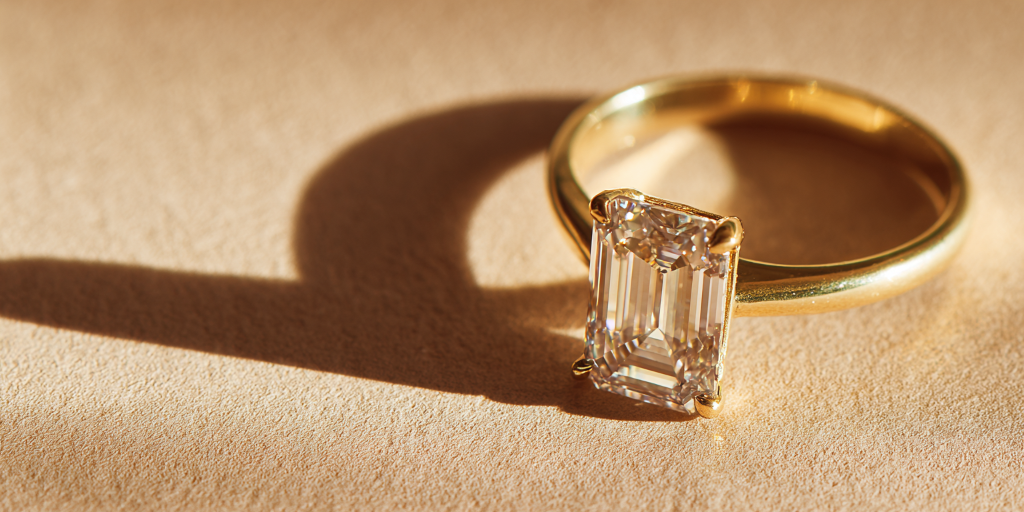
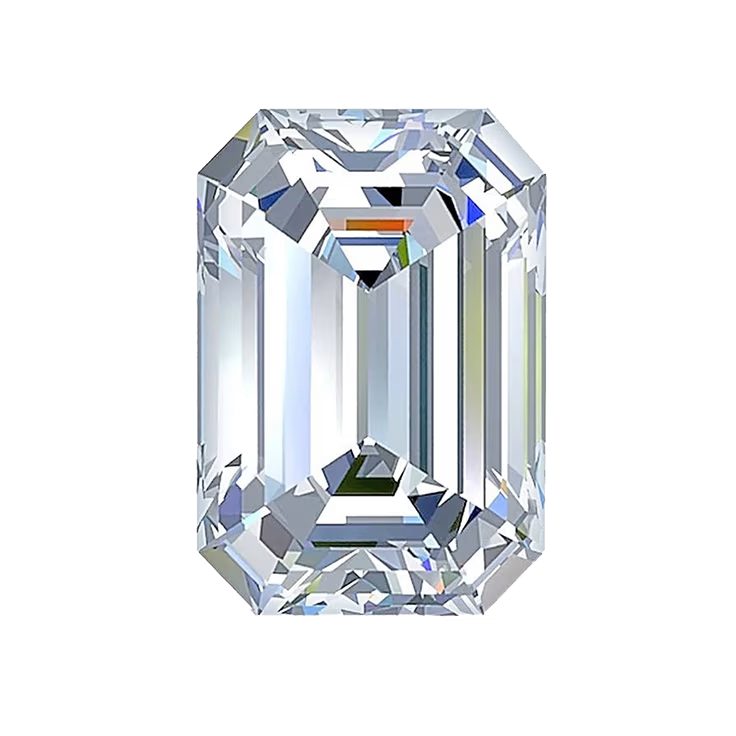
The emerald cut is a rectangular diamond with stepped facets, a large open table, and cropped corners. Originally developed for emerald gemstones, this step-cut style creates a unique "hall of mirrors" effect with broad flashes of light rather than the intense sparkle of brilliant cuts.
Featuring typically 50-58 step-cut facets arranged in parallel lines, emerald cuts emphasize a diamond's natural clarity and color. The large table and open design create an architectural, sophisticated appearance that has captivated jewelry lovers since the Art Deco era.
Emerald cuts are prized for their sophisticated, vintage appeal and the way they showcase a diamond's natural beauty through clarity rather than sparkle.
Why Choose an Emerald Cut?
Advantages
- •Sophisticated, vintage look with timeless elegance
- •Emphasizes clarity and shows diamond quality clearly
- •Ideal for minimalist or art deco designs
- •Unique 'hall of mirrors' effect with stepped facets
- •Generally more affordable than brilliant cuts
Considerations
- •Less sparkle and fire than brilliant cuts
- •Shows inclusions and color more readily
- •Requires higher clarity grades for best appearance
The History and Origin of the Emerald Cut
From Emeralds to Diamonds
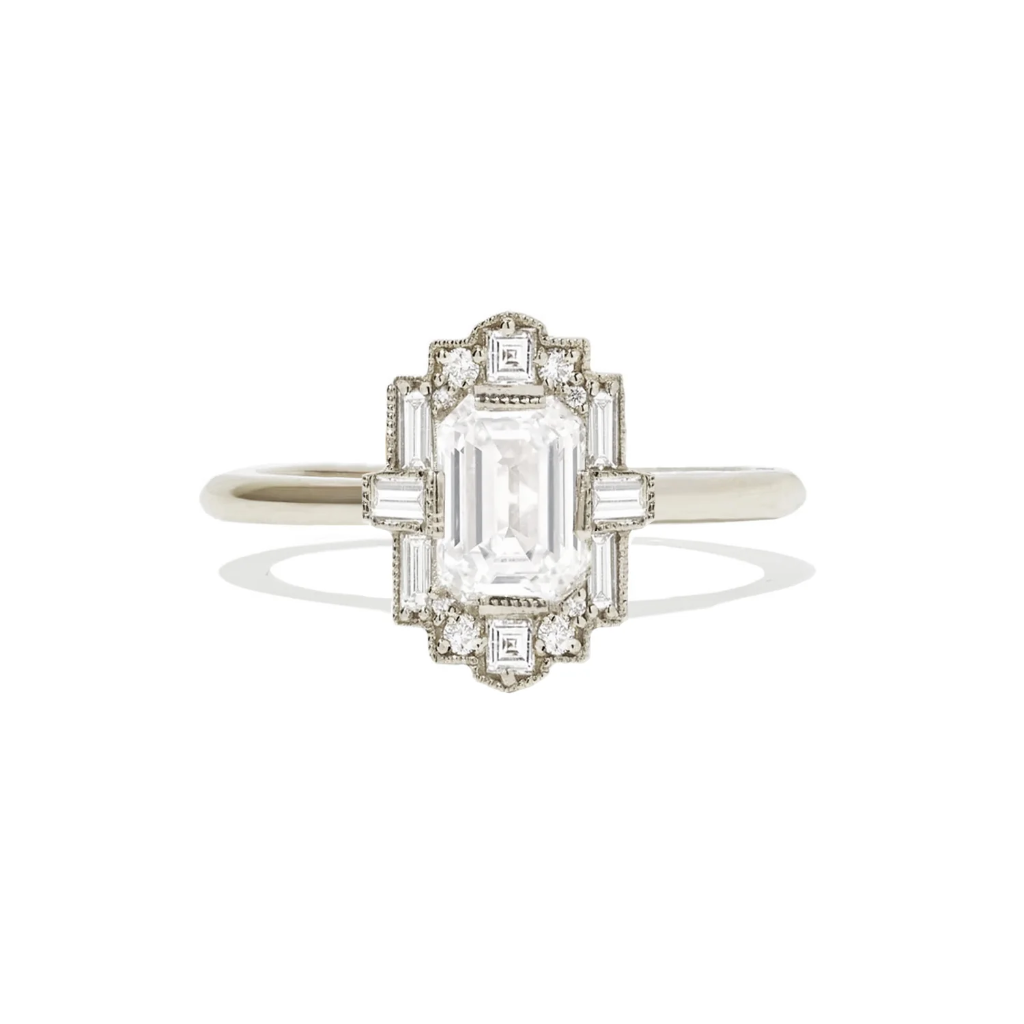
The emerald cut originated in the 1500s when stonecutters developed this step-cut technique specifically for emerald gemstones. The cut's design helped protect the brittle emerald from chipping during the cutting process, with cropped corners adding structural integrity.
By the 1920s, the emerald cut was standardized for diamonds and became synonymous with Art Deco elegance. Its clean geometric lines perfectly captured the era's aesthetic, making it a favorite among sophisticates and celebrities of the Jazz Age and beyond.
Best Settings for Emerald Cut Diamonds
Solitaire
Classic setting that showcases the emerald cut's clean lines and elegant proportions
- •Maximum light exposure
- •Timeless elegance
- •Showcases diamond quality
East-West Setting
Emerald diamond set horizontally for a modern, architectural appearance
- •Contemporary style
- •Unique orientation
- •Comfortable for daily wear
Double Band Setting
Two parallel bands frame the emerald cut for a sophisticated look
- •Added visual interest
- •Secure setting
- •Modern aesthetic
Hidden Halo
Subtle halo beneath the emerald cut adds brilliance without overwhelming the design
- •Enhanced sparkle
- •Maintains clean lines
- •Added security
Expert Tips & Advice
Clarity is Critical
Because of its large, open table and long step-cut facets, the emerald cut acts almost like a window into the diamond's interior. Unlike brilliant cuts that can mask small imperfections with intense sparkle, the emerald cut's transparent nature means inclusions and blemishes are far more visible to the naked eye. For this reason, we strongly recommend selecting a clarity grade of VS1 or higher to ensure a clean, flawless appearance. When reviewing grading reports, pay close attention to where inclusions are located. Those near the edges or tucked under the step facets are far less noticeable than those sitting directly beneath the broad table facet. If budget allows, a VVS2 grade offers an excellent middle ground between visual perfection and value.
Length-to-Width Ratio
The length-to-width ratio is one of the most important factors in determining the visual character of an emerald cut diamond. The classic and most sought-after range falls between 1.30 and 1.50. A ratio closer to 1.30 produces a more compact, nearly square silhouette that can feel bold and architectural, while a ratio approaching 1.50 delivers the maximum elongated elegance that many associate with this shape. Your ideal ratio will depend on personal taste as well as the wearer's finger shape and size. Longer ratios tend to create a slenderising effect on the hand, while squarer proportions offer a stronger, more statement-making presence. When in doubt, 1.40 is often considered the sweet spot that balances elongation with proportion.
Colour Considerations
Step-cut diamonds like the emerald cut tend to reveal body colour more readily than their brilliant-cut counterparts. The broad, flat facets don't break up light into as many colourful flashes, which means any warmth or tint in the stone becomes more apparent — especially in larger carat sizes where colour is naturally more visible. For settings in white gold or platinum, we recommend selecting colour grades of F or G to maintain a bright, icy white appearance that complements the cool metal tone. If you're choosing a yellow or rose gold setting, you can comfortably opt for H or I grades, as the warm metal naturally complements and conceals any slight colour in the diamond, offering significant savings without any visible compromise.
Choosing the Right Setting Style
The setting you pair with an emerald cut diamond plays a crucial role in how the stone is perceived. Because emerald cuts have clean, geometric lines and a sophisticated, understated character, they tend to look best in settings that echo that architectural elegance. Simple solitaire designs with slim, polished bands allow the diamond's hall-of-mirrors effect to take centre stage without distraction. For those who want additional sparkle, a hidden halo set beneath the crown adds brilliance from certain angles while preserving the clean top-down silhouette. East-west settings — where the diamond is oriented horizontally — offer a modern, fashion-forward twist that is growing in popularity. Avoid overly ornate or heavily embellished bands that can compete with the emerald cut's refined aesthetic; the beauty of this shape lies in its restraint and quiet confidence.
Which Do I Prefer?
| Feature | Emerald Cut | Radiant Cut | Asscher Cut |
|---|---|---|---|
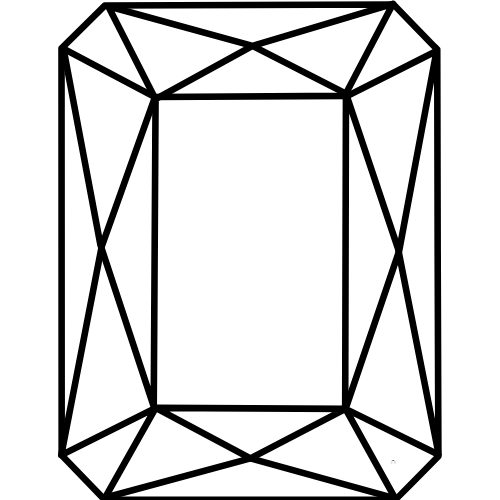
| Facet Style | Step-cut facets | Brilliant-cut facets | Step-cut facets |
| Shape | Rectangular with cut corners | Square/rectangular with cut corners | Square with cut corners |
| Light Performance | Hall of mirrors effect | Brilliant sparkle and fire | Hall of mirrors effect |
| Appearance | Elegant, elongated, sophisticated | Versatile, brilliant, modern | Vintage, square, Art Deco |
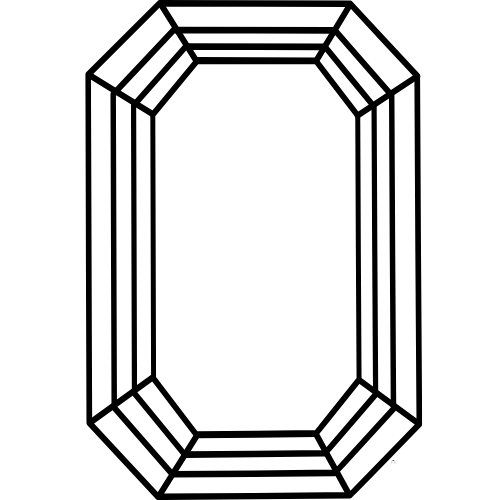 |  |  |
Choose Emerald if: You love elegant elongated shapes with sophisticated step-cut facets and vintage charm.
Choose Radiant if: You want brilliant sparkle combined with the rectangular shape and beveled corners for durability.
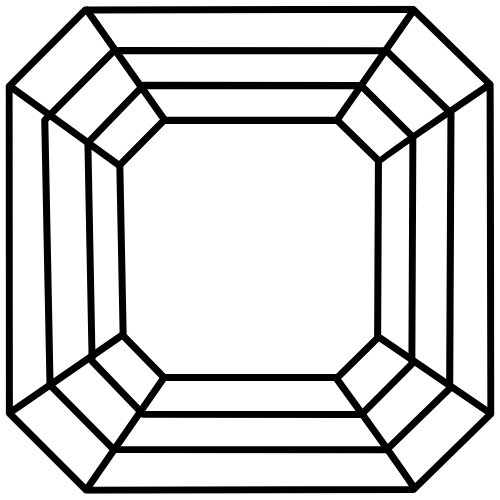
Choose Asscher if: You prefer a square silhouette with Art Deco elegance and the same hall-of-mirrors effect.
Frequently Asked Questions
Yes, emerald cuts produce less brilliance and fire than brilliant-cut diamonds like round or oval shapes. Instead of sparkle, emerald cuts offer a subtle 'hall of mirrors' effect with broad flashes of light. This creates elegant, sophisticated beauty rather than intense sparkle.
Emerald cuts can appear larger than round diamonds of the same carat weight due to their elongated rectangular shape and large table (top surface). The step-cut faceting style also creates an open, expansive appearance that maximizes visual size.
The most popular length-to-width ratio for emerald cuts is between 1.30 and 1.50, creating a classic rectangular appearance. Ratios closer to 1.30 appear more square, while ratios near 1.50 create a more elongated, elegant silhouette.
Emerald cuts show inclusions more readily than brilliant cuts due to their large, open table and step-cut faceting. We recommend VS1 clarity or higher for emerald cuts to ensure an eye-clean appearance. The step facets act like windows, making internal characteristics more visible.
Emerald cuts are prized for their sophisticated, vintage appeal and architectural beauty. They emphasize a diamond's natural clarity and color rather than sparkle, creating understated elegance perfect for those who appreciate subtle luxury and classic design.
Discover Our Emerald Cut Collection
Explore our sophisticated selection of emerald cut diamond engagement rings, each designed to showcase the understated elegance and architectural beauty that makes emerald cuts truly timeless.