Diamond Colour Guide
Explore the fascinating world of diamond colour. Learn how the absence of colour impacts a diamond's rarity, value, and overall appearance.
What is Diamond Colour?
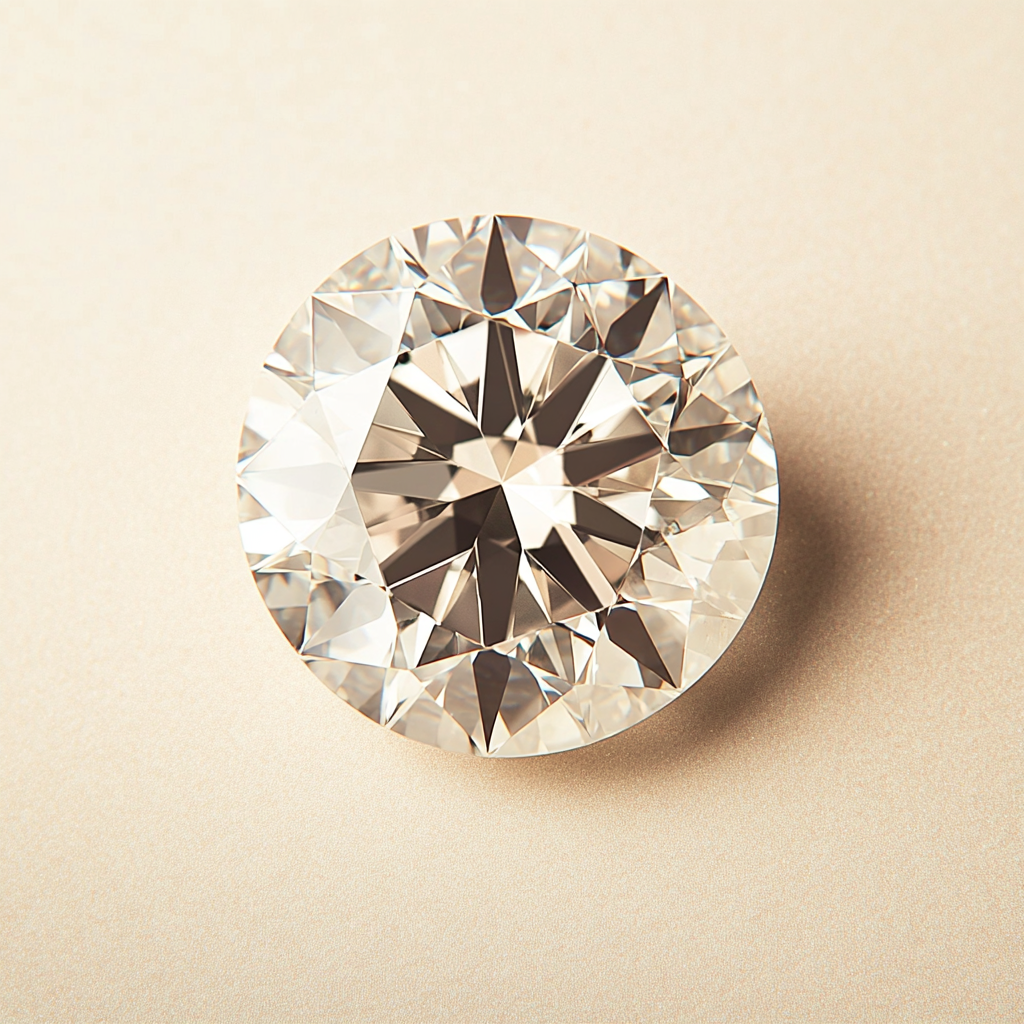
Diamond colour actually refers to the absence of colour. The less colour a white diamond has, the higher its grade and value. Diamond colours can broadly be divided into two categories: the colourless diamond scale and fancy coloured diamonds.
The colourless diamond scale is graded by the Gemological Institute of America (GIA) using a D to Z system, where D is the highest grade on the scale. Diamonds graded between D and F fall into the colourless category, meaning they appear the brightest and most pure to the eye. As you move further down the scale towards Z, diamonds gradually take on a more tinted yellowish or brownish appearance. Each step down is subtle, but these differences do affect a diamond's value and overall look.
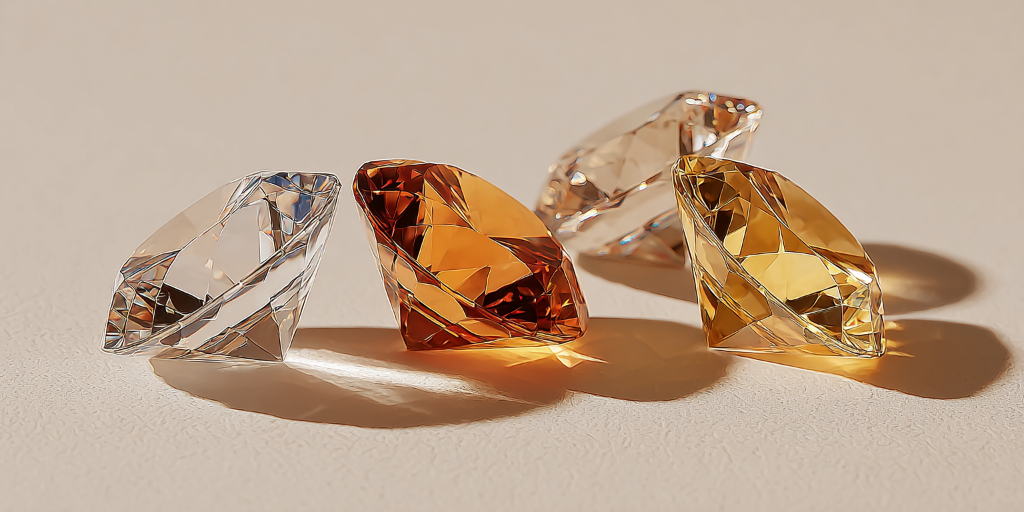
Fancy coloured diamonds are an entirely different world. They do not follow the D to Z scale but are instead categorised by their colour intensity and hue. These diamonds come in a wide range of stunning colours, from Fancy Vivid Pink to Fancy Blue, Green, Yellow, Red and many more. Their beauty lies in the richness and saturation of their colour, making each one truly unique.
The Diamond Colour Grading Scale
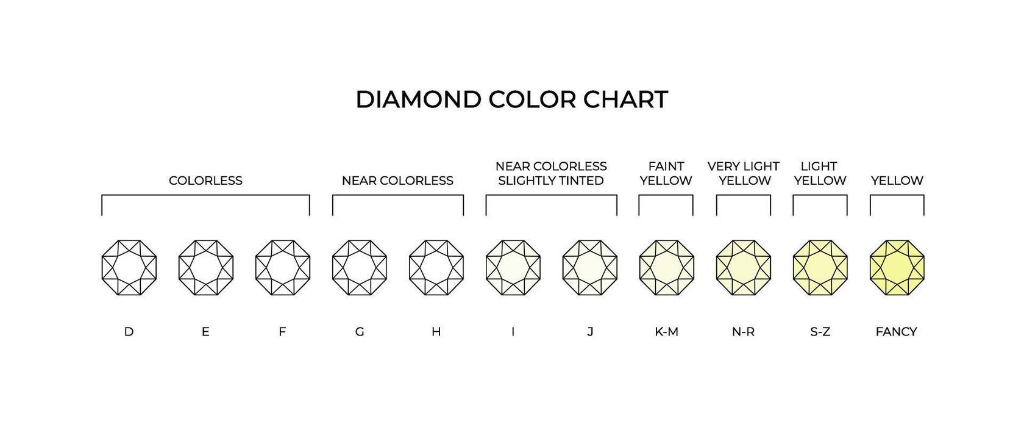
How is Diamond Colour Graded?
At Labelle, all of our laboratory-grown diamonds are independently graded by the International Gemological Institute (IGI), one of the world's leading diamond certification laboratories. Each diamond is carefully examined under controlled lighting conditions to accurately determine its colour grade.
To ensure the most precise result, diamonds are graded upside down against a neutral white background. This allows the grader to focus purely on the natural body colour of the diamond, without the sparkle and reflections influencing the appearance. The diamond is then compared to a set of professionally calibrated master stones until the closest colour match is found.
Diamond colour is graded on an alphabetical scale, beginning with D (completely colourless) and continuing down the alphabet as warmer tones become more visible. Even the smallest differences between grades can be difficult to notice with the naked eye, especially once a diamond is set into a ring.
If a diamond falls between two colour grades during the grading process, the lower grade is always awarded. For example, if a diamond appears to sit between an F and G colour, it will receive a G colour grade. This ensures consistency and maintains strict grading standards across all certified diamonds.
Colour vs. Brilliance: An Important Distinction
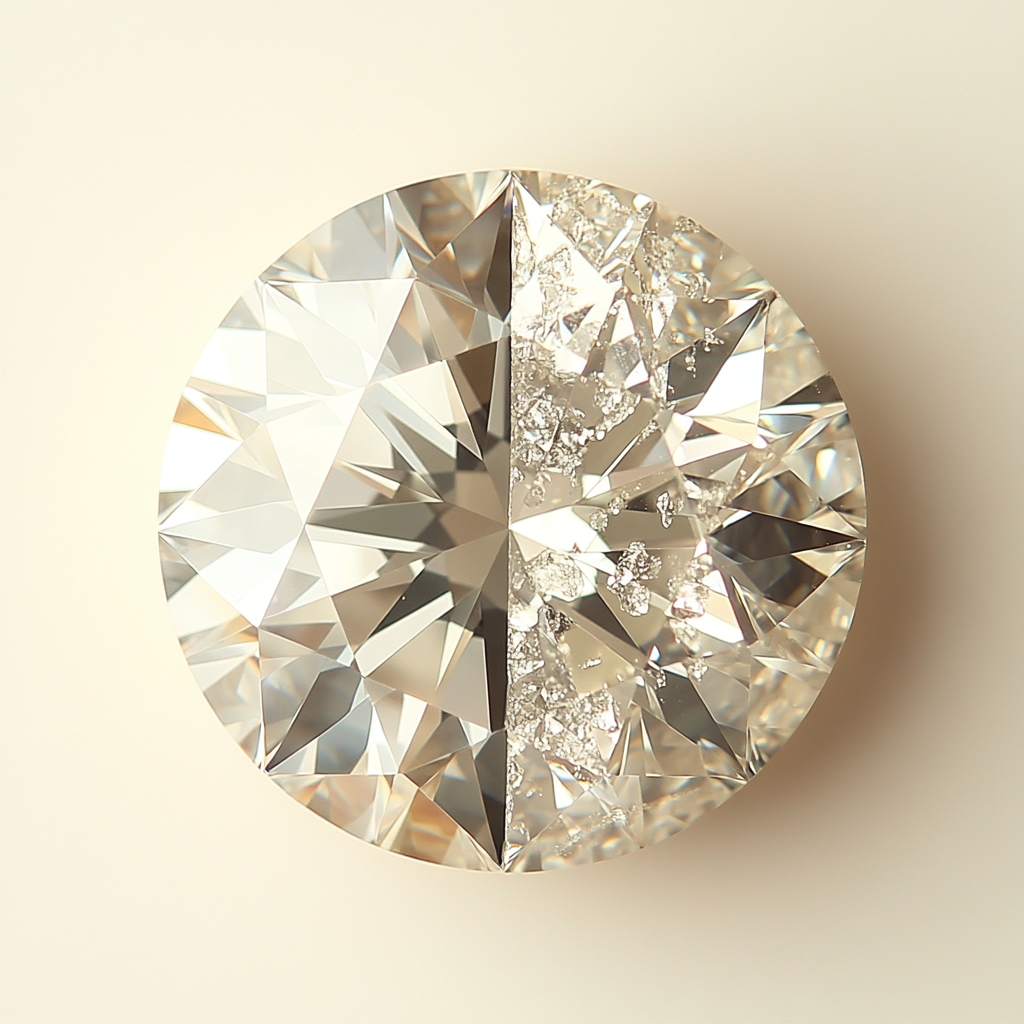
It's crucial to understand that diamond colour is different from a diamond's brilliance or fire.
- Colour refers to the natural tint inherent in the diamond.
- Brilliance refers to the white light reflected from the diamond, which is primarily determined by its cut quality.
- Fire refers to the dispersion of light into spectral colours, also largely influenced by cut.
A diamond can have excellent colour (e.g., D grade) but appear dull if poorly cut. Conversely, a well-cut diamond with a lower colour grade (e.g., G or H) can still exhibit stunning brilliance and fire.
Choosing the Right Diamond Colour
Choosing the right diamond colour grade depends on both your personal preference and the type of ring setting you select. Diamond colour is one of the easiest characteristics to notice with the naked eye, especially when comparing stones side by side. Unlike clarity, which often requires magnification to spot inclusions, colour differences can sometimes be visible without specialised equipment.
At Labelle, we primarily work with D to F colour laboratory-grown diamonds. These are considered colourless grades and are highly valued for their bright, crisp appearance. They pair beautifully with all jewellery styles and offer the most icy-white look, particularly in white metals such as platinum or white gold.
For clients working within a stricter budget, G or H colour diamonds can also be an excellent choice. These diamonds still appear white in most jewellery settings, especially once mounted in a ring. However, moving below the H colour range may result in warmer yellow or brown undertones becoming more noticeable to the eye.
The choice of metal also plays an important role. In yellow gold or rose gold settings, slightly warmer diamond colours often blend naturally with the tone of the metal, making G or H colours appear very elegant. Platinum and white gold settings, on the other hand, create a stronger contrast against the diamond, which is why colourless grades such as D, E, or F are generally preferred for a brighter overall appearance.
It is also important to remember that diamond colour is graded under professional laboratory lighting conditions. In everyday wear, many colour differences are far more subtle than they may appear during grading or when viewed side by side under magnification.
Lab-Grown Diamonds & Colour
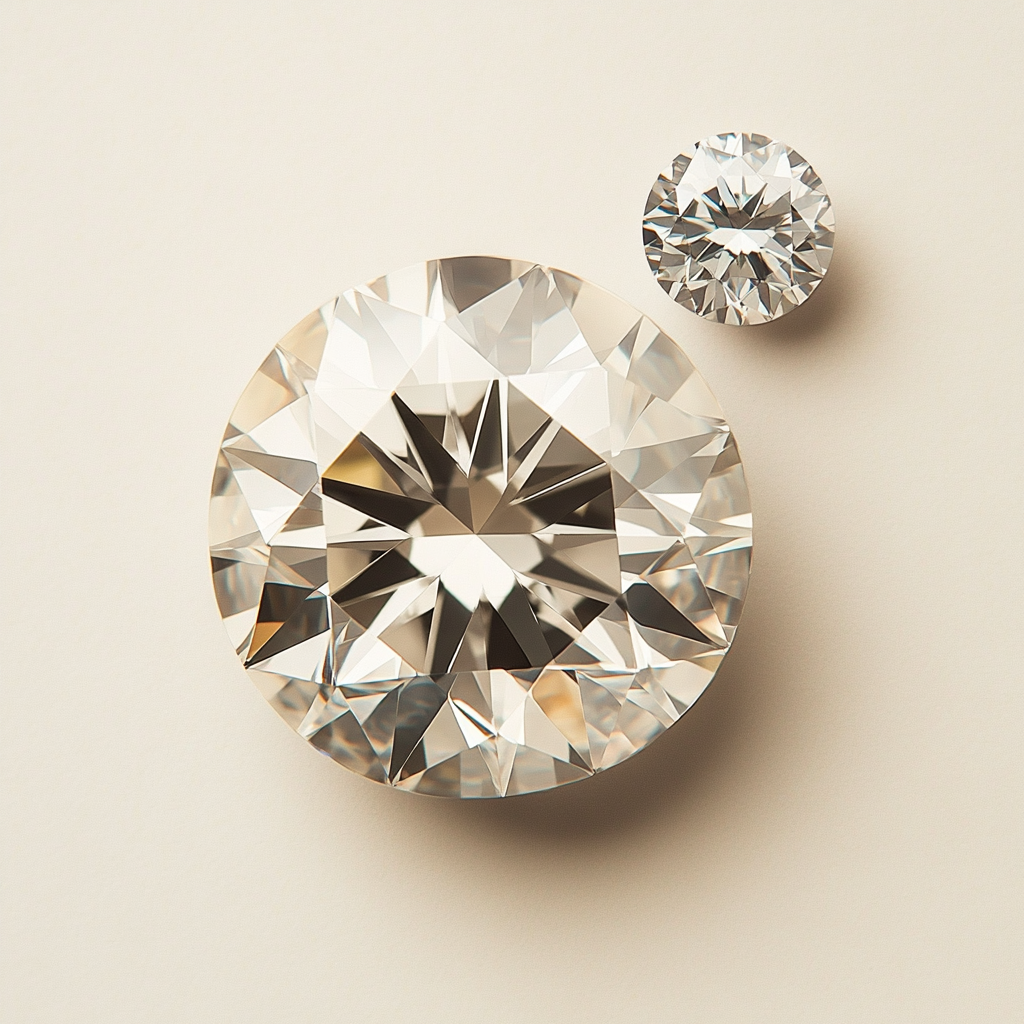
Lab-grown diamonds are graded using the same D-to-Z colour scale as natural diamonds. Due to the controlled environment in which they are grown, it's often possible to achieve higher colour grades more consistently and at a better value with lab-grown diamonds.
This means you can often get a visually stunning, colourless or near-colourless lab-grown diamond for your budget, allowing you to prioritize other factors like cut or carat weight if desired.
Frequently Asked Questions
For most engagement rings, D to F colour grades offer the most brilliant, icy-white appearance. However, G and H grades also look beautiful in most settings and can offer better value. The best grade for you depends on your personal preference, budget, and the metal you choose for your ring.
When viewed individually and set in a ring, the difference between D and G colour grades is extremely subtle and often unnoticeable to the untrained eye. Side by side under professional lighting, a trained gemologist can spot the difference, but in everyday wear the distinction is minimal.
Yes, the metal setting plays a significant role. White gold and platinum settings create more contrast, making any warmth in the diamond more visible, so higher colour grades like D to F are generally preferred. Yellow gold and rose gold settings naturally complement warmer diamond tones, making G or H colour diamonds appear just as white.
Yes, lab-grown diamonds are graded on the same D to Z colour scale as natural diamonds. Because they are created in a controlled environment, it is often easier to achieve consistently high colour grades such as D, E, or F at a more accessible price point compared to natural diamonds of the same grade.
Before the GIA established its standardised grading system, various inconsistent systems used A, B, and C grades with different meanings. To avoid any confusion with these older scales, the GIA chose to begin its universally recognised system at D, creating a clear and fresh starting point for diamond colour grading.