
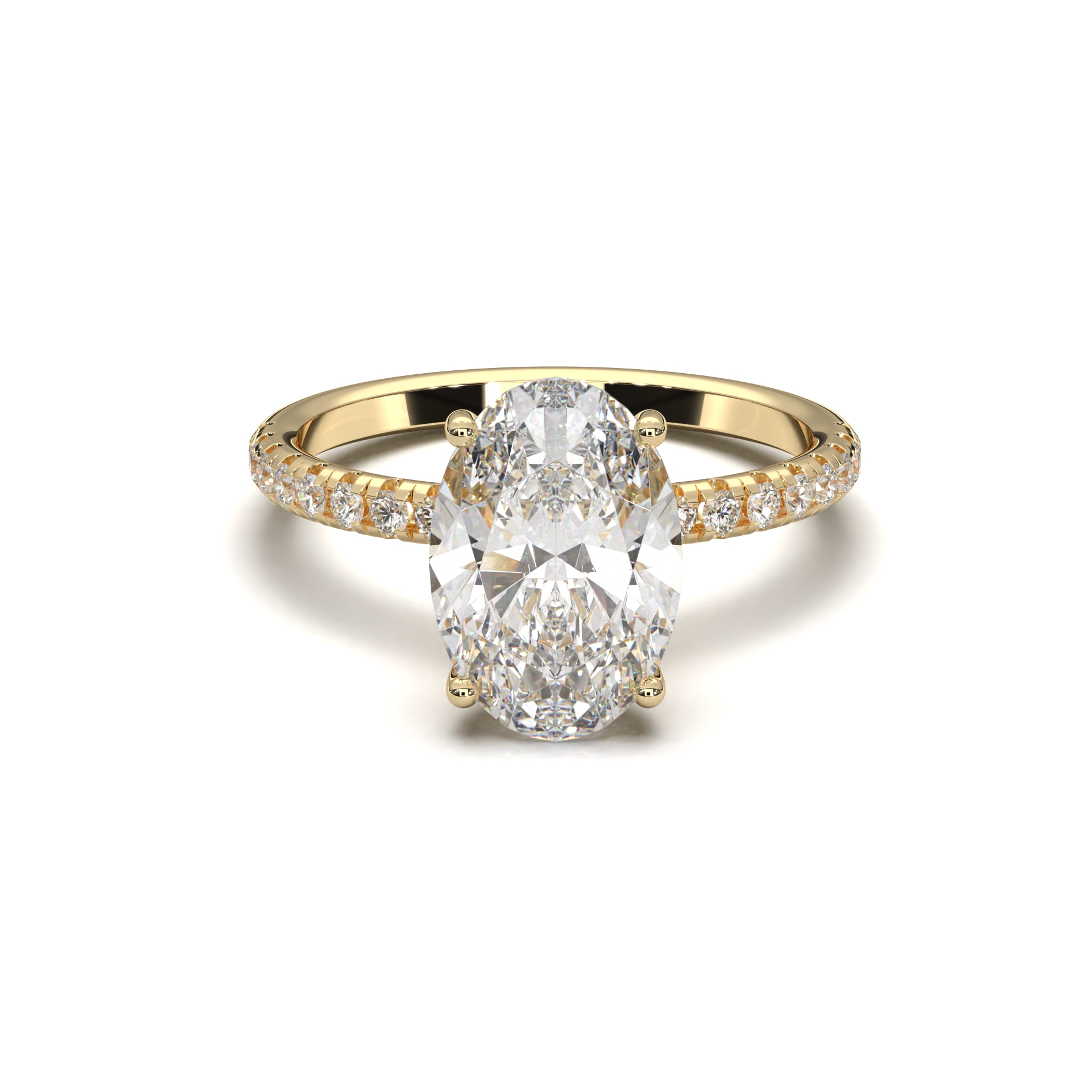
Lab-Grown vs Natural Diamonds
Understanding the key differences between lab-grown and natural diamonds will help you make an informed choice that aligns with your values, budget, and preferences for your perfect engagement ring.
What Are Lab-Grown Diamonds?
Lab-grown diamonds are real diamonds created in controlled laboratory environments using advanced technology that replicates the natural diamond formation process. Using either High Pressure High Temperature (HPHT) or Chemical Vapor Deposition (CVD) methods, these diamonds are grown from tiny diamond seeds over several weeks.
The result? Diamonds that are chemically, physically, and optically identical to those formed naturally over billions of years. They exhibit the same brilliance, fire, and durability as natural diamonds, graded by the same 4Cs standards.

What Are Natural Diamonds?
Natural diamonds are formed deep within the Earth's mantle, approximately 90-120 miles below the surface, under extreme pressure and temperatures exceeding 2,000°F. This process takes place over billions of years, with most diamonds being between 1-3 billion years old.
These precious gems are brought to the surface through volcanic eruptions and are then mined from kimberlite pipes or alluvial deposits. Each natural diamond is unique, carrying the geological story of its formation and the specific conditions of its origin location.

The Benefits of Each
Lab-Grown Diamond Benefits
Ethical Peace of Mind
Every lab-grown diamond is guaranteed conflict-free with complete traceability from creation to your hand.
Environmental Responsibility
Significantly lower environmental impact with no mining required and renewable energy use in production.
Exceptional Value
Get a larger or higher quality diamond for your budget - often 30-50% more value than natural alternatives.
Advanced Technology
Created using the latest scientific advances, often resulting in superior clarity and fewer inclusions.
Natural Diamond Benefits
Natural Rarity
Each diamond is unique, formed over billions of years deep within the Earth's crust.
Traditional Heritage
Rich history and established cultural significance in engagement and fine jewelry traditions.
Established Market
More mature resale market with established valuation practices over time.
Geographic Uniqueness
Each stone carries the geological story of its specific origin location.
Side-by-Side Comparison
Feature | Lab-Grown Diamond | Natural Diamond |
|---|---|---|
Origin | Created in controlled laboratory environments using advanced technology | Formed deep within the Earth over billions of years under extreme pressure and heat |
Chemical Composition | Pure carbon with identical crystal structure - 100% real diamond | Pure carbon with identical crystal structure - 100% real diamond |
Physical Properties | Identical hardness (10 on Mohs scale), brilliance, and optical properties | Identical hardness (10 on Mohs scale), brilliance, and optical properties |
Ethical Sourcing | Guaranteed conflict-free with complete supply chain transparency | Requires careful sourcing and certification to ensure ethical origins |
Environmental Impact | Significantly lower carbon footprint and minimal environmental disruption | Higher environmental impact including land disruption and water usage |
Price | Typically 30-50% more affordable than comparable natural diamonds | Higher price point due to rarity and mining costs |
Availability | Can be produced on demand in various sizes and qualities | Limited by natural formation and discovery |
Certification | Graded by the same institutions (GIA, IGI, HRD) with identical standards | Graded by established institutions (GIA, IGI, HRD) |
Resale Value | Developing secondary market with evolving resale values | More established resale market (though typically not full retail value) |
Frequently Asked Questions
Ready to Choose Your Perfect Diamond?
Whether you choose lab-grown or natural, we're here to help you find the perfect diamond that reflects your values and creates a meaningful symbol of your love story.